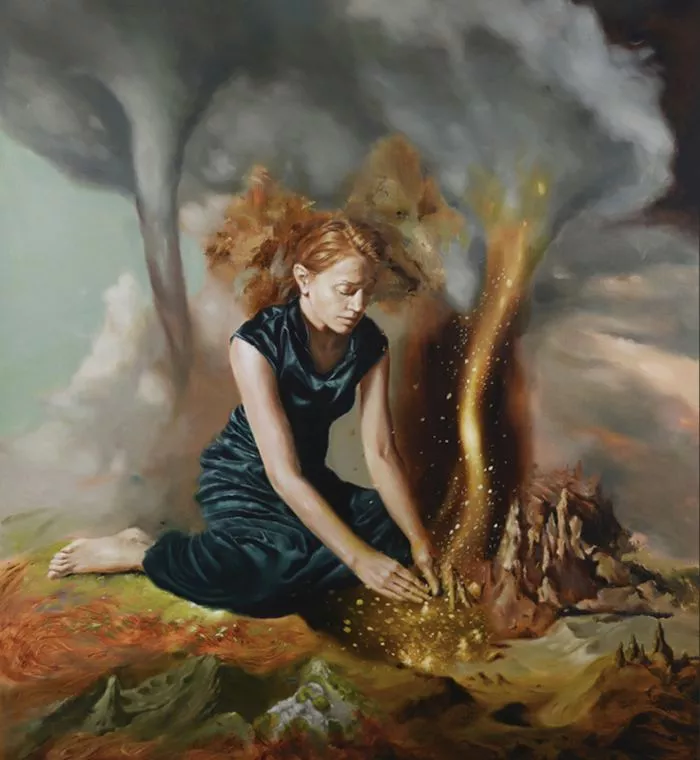
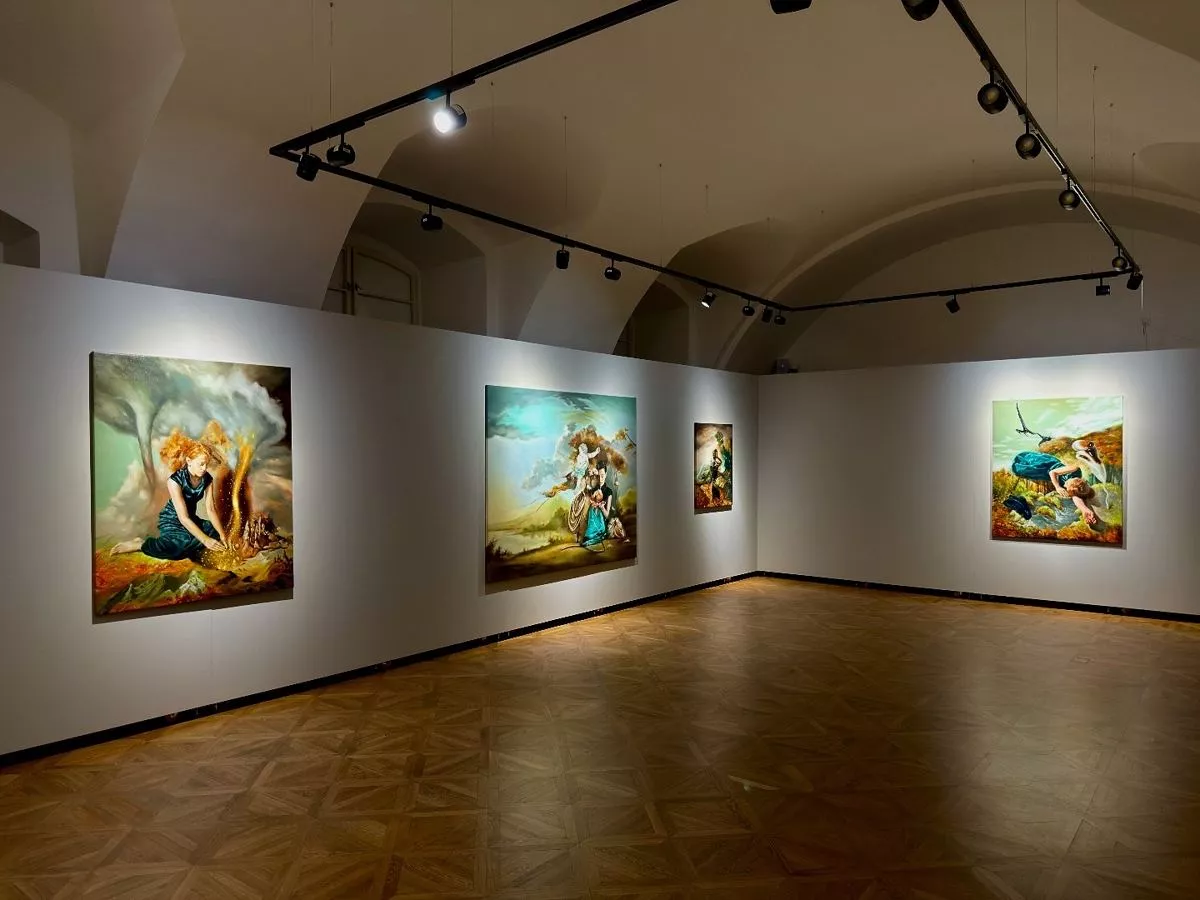
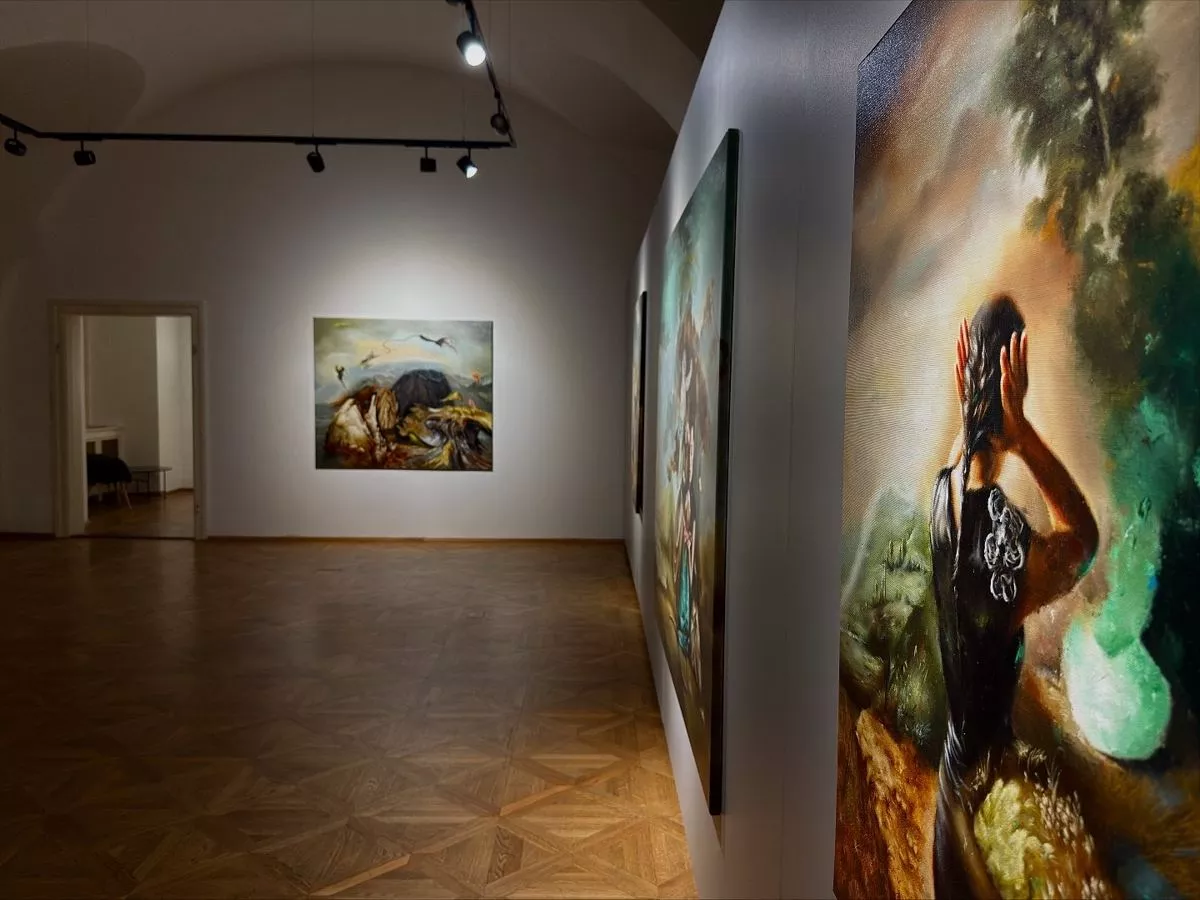
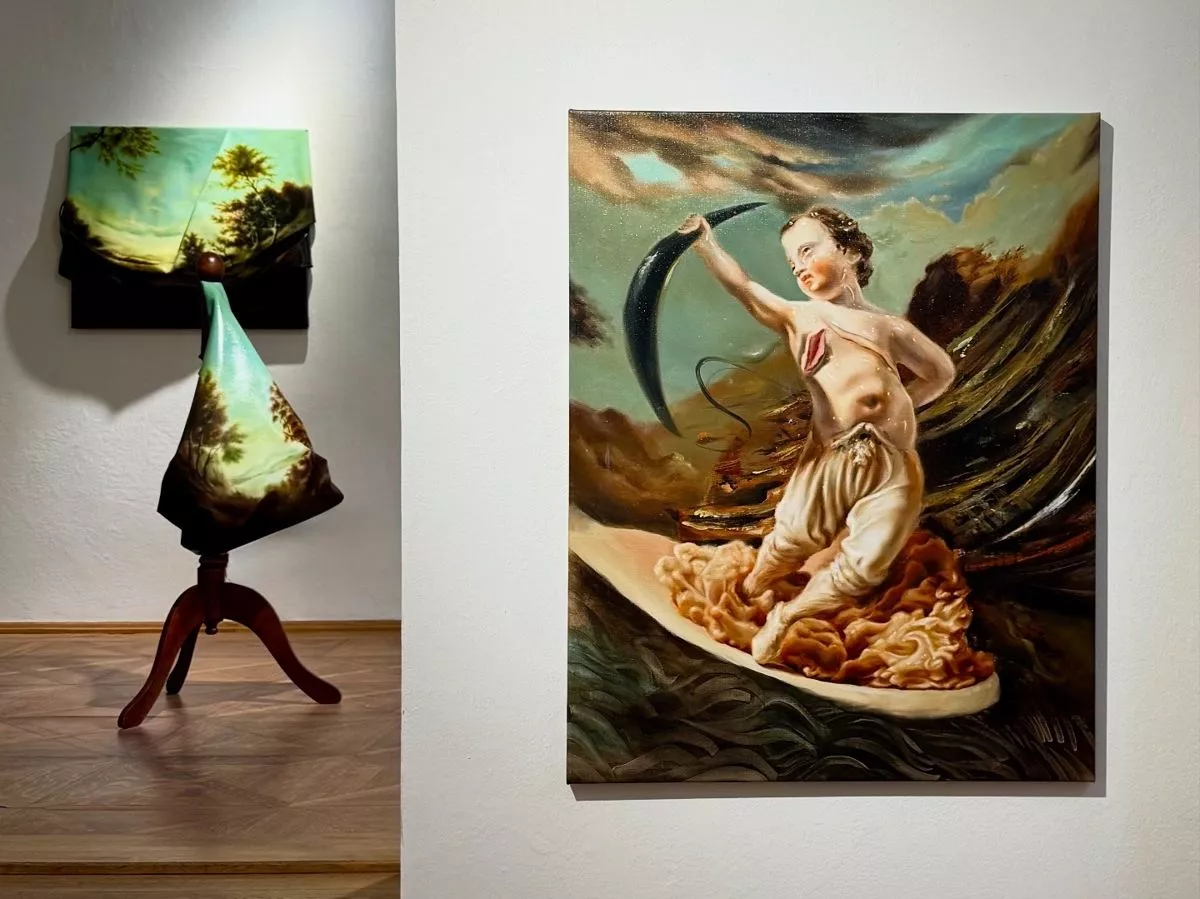
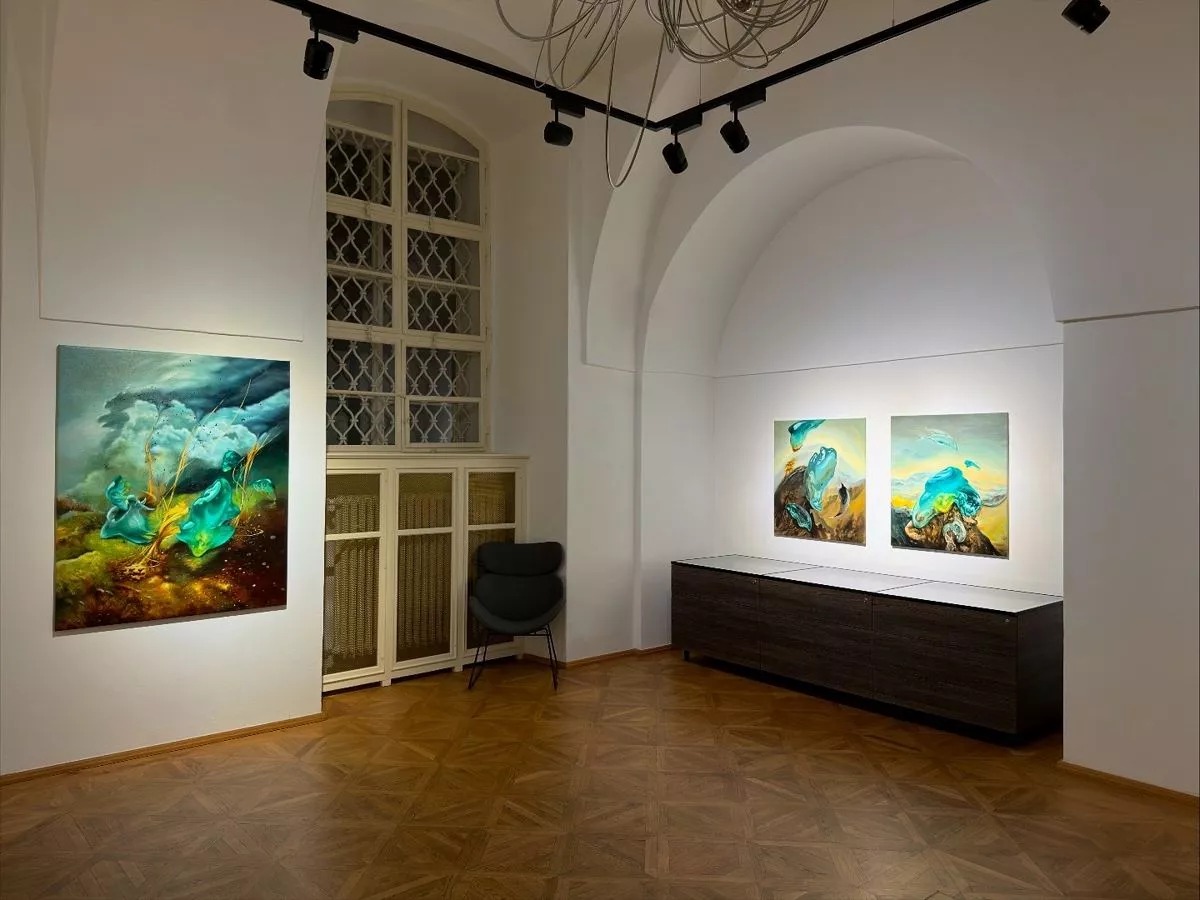
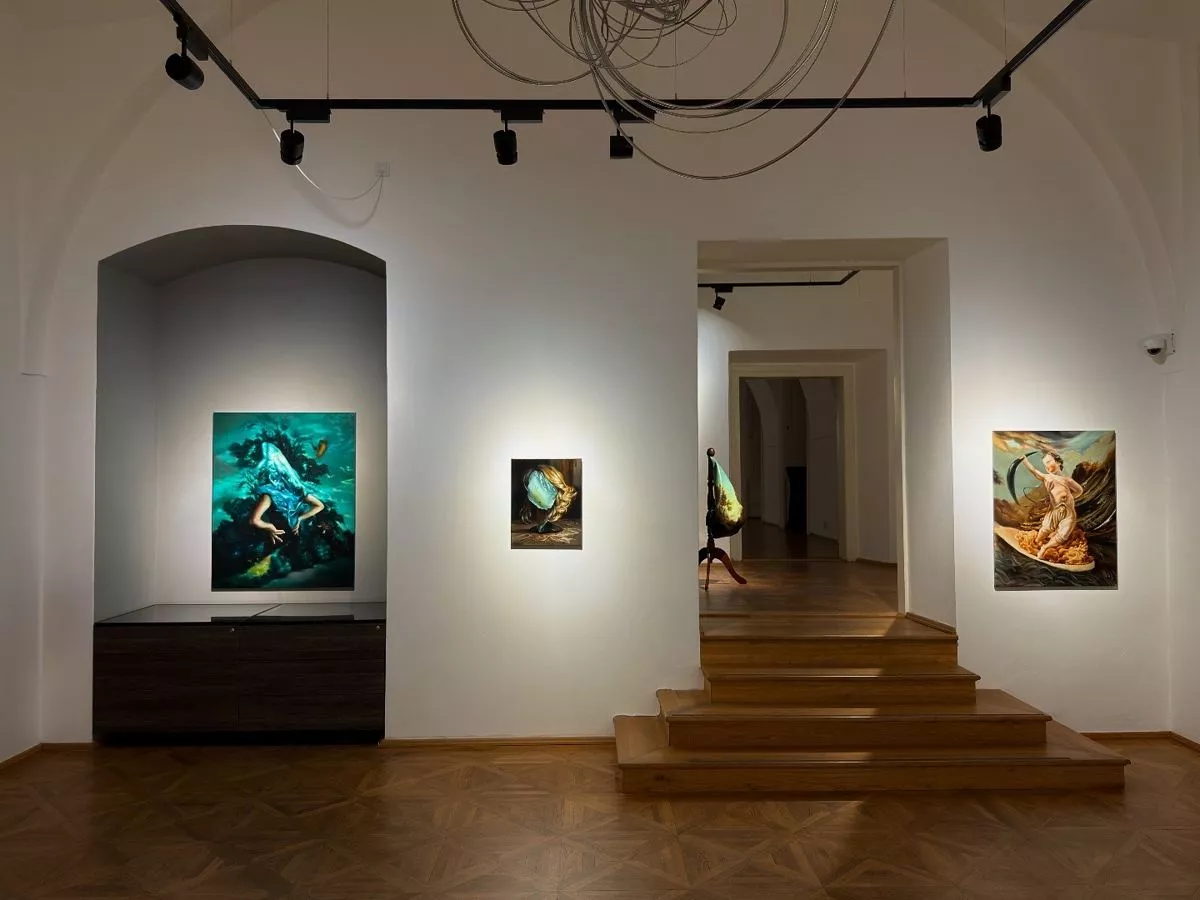
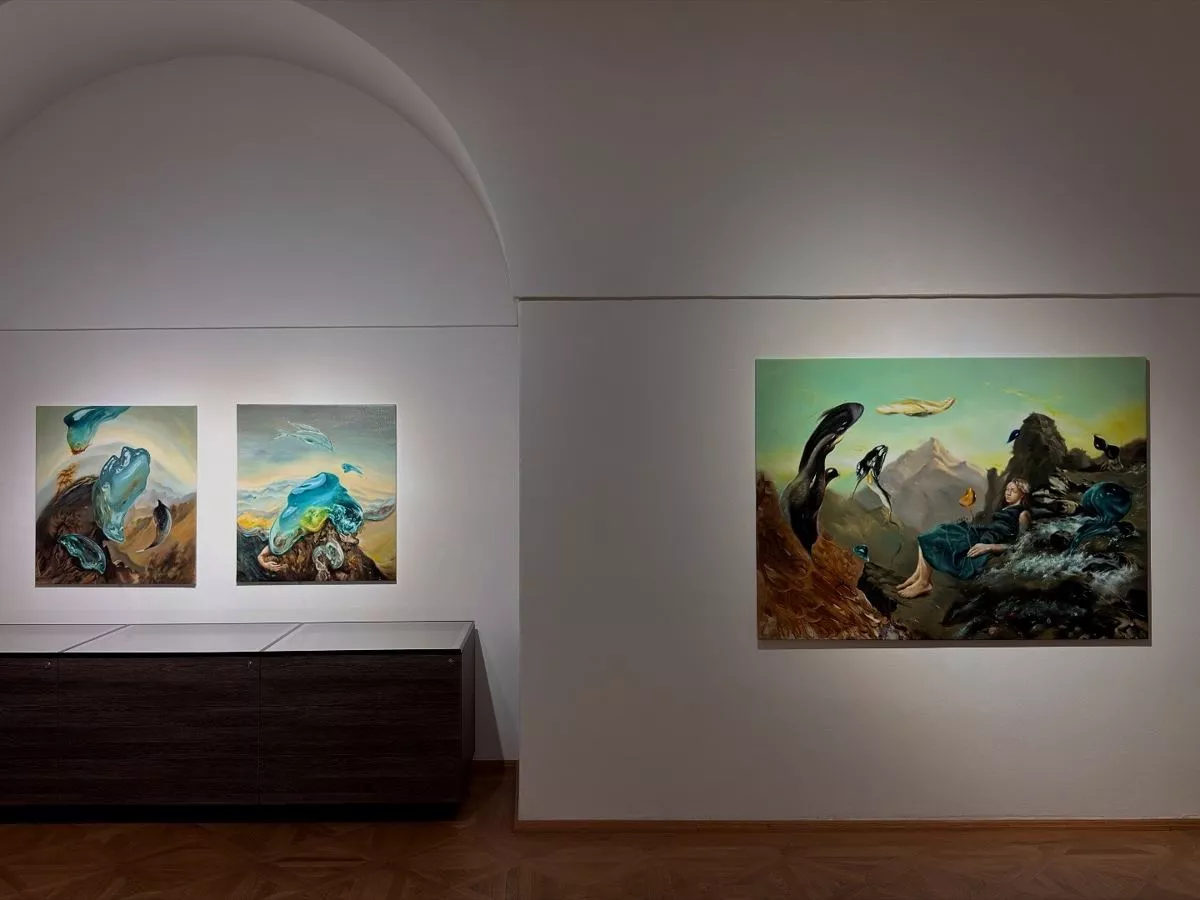
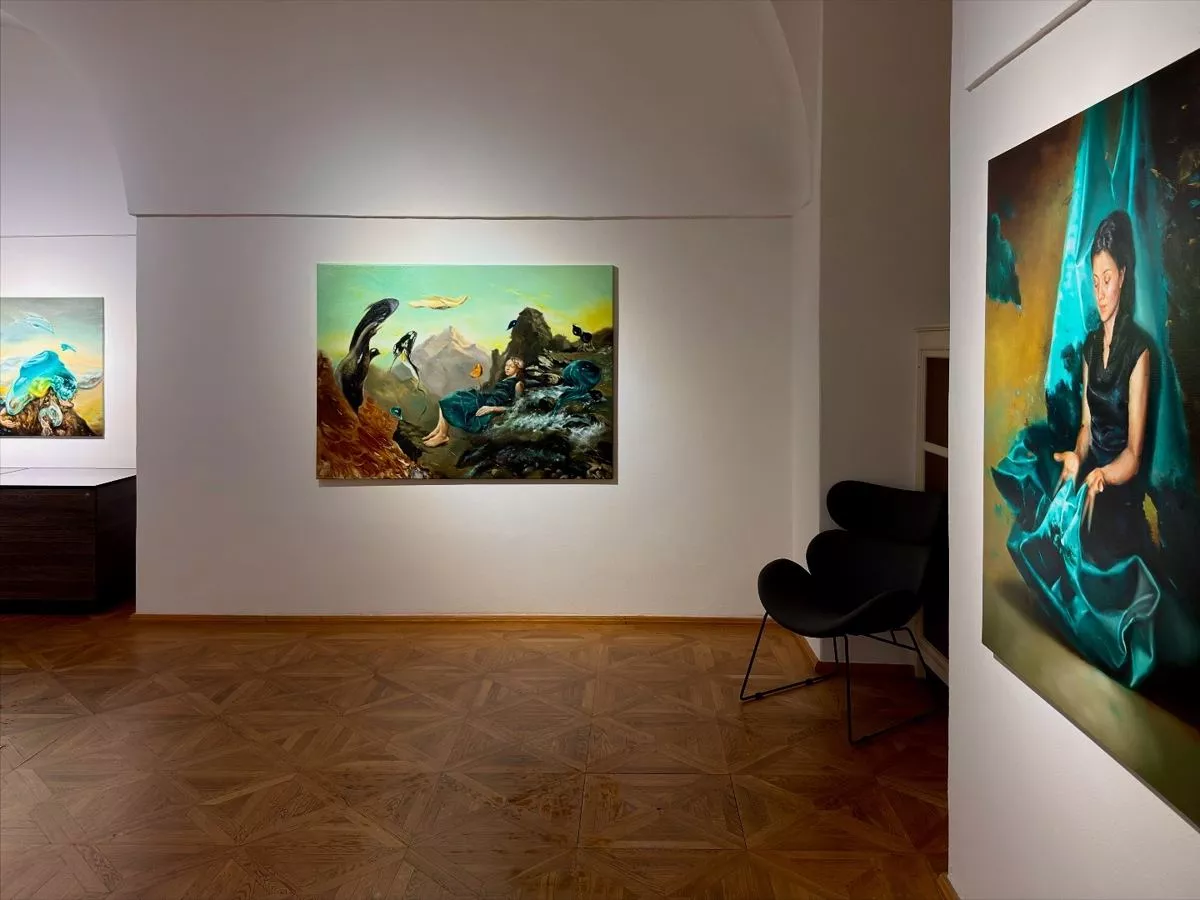
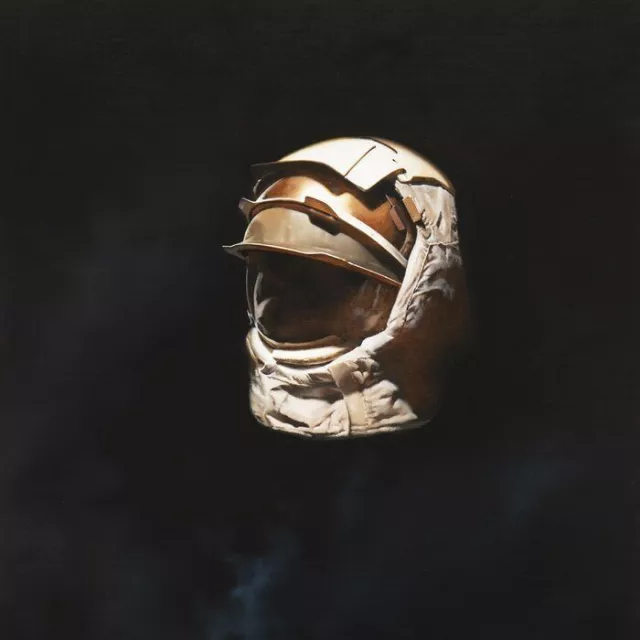
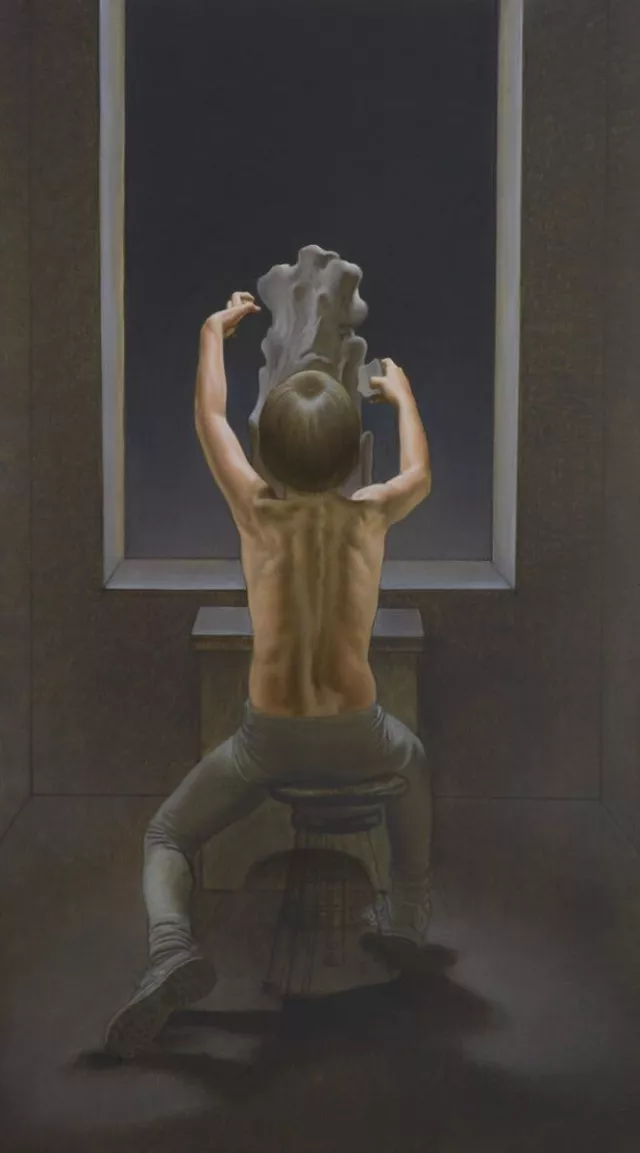
Flavia Pitis, a contemporary Romanian painter, has long searched for a pictorial language that connects the bodily and the spiritual. Her work grows out of the tradition of classical painting but transforms it into an intimate, contemporary idiom. In her canvases she explores solitude, melancholy and an atmosphere of inner tension. Female figures, often referring to the artist herself, sometimes look away and at other times reveal faces, hair and gestures of the hands in which quiet strength and fragility are concentrated. Their reserve and silence feel like a premonition, or a longing to express what remains unsaid. Light in her paintings is not only a painterly device but a metaphor for intimacy and fragile revelation, as if the radiance outside could also be hidden within us.
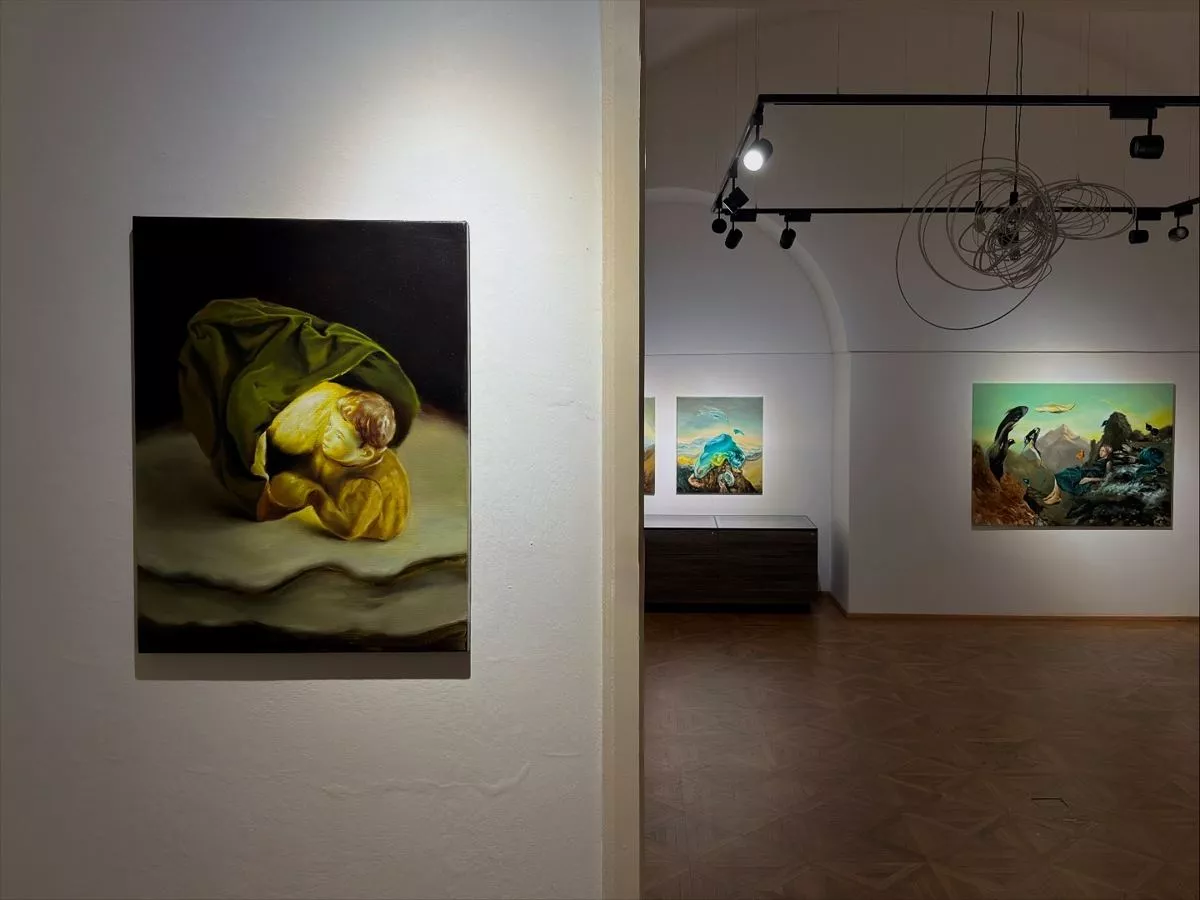
The symbols that appear in the paintings work as traces of memory and carry the character and emotion of the works. Landscape is not just a background but an extension of the human body, a living space that breathes and vibrates. The sky appears in all its forms, from soft dusk to dazzling glow, creating a dynamic with figures immersed in half-shadow. Turquoise tones evoke the sea and the depth of minerals, while earthy browns recall soil, rootedness and memory. Some paintings are made on folded canvas, whose structure adds another dimension. The figure oscillates between presence and absence, between the weight of the earth and the lightness of the sky, between the intimate and the universal, and between reality and dream. The exhibition thus brings together beautiful figures and landscape full of intriguing details and anomalies.
The Heart of the Earth is an exhibition about layers – about what is stored in space, in the body and in memory. Its atmosphere opens room for ecological reflection and reminds us that we are part of quiet rhythms larger than ourselves. It is an invitation to listen to the impulses that pass between us and the world, a reminder that a painting is not just a frame but a gateway to reflections on life, on the Earth and on the human heart.
— Bára Šedová