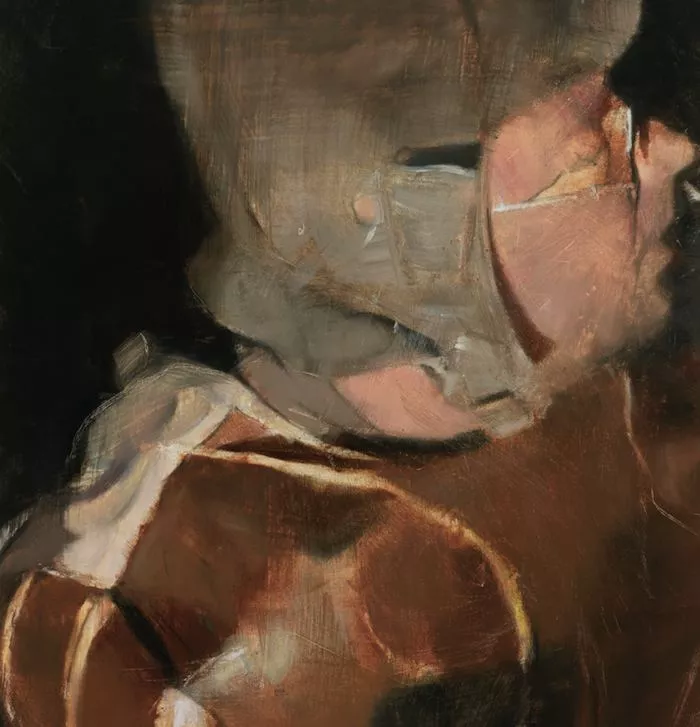
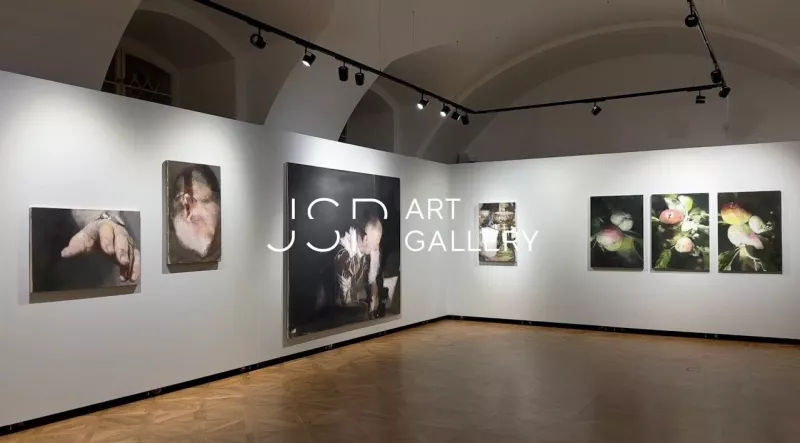
Zbyněk Sedlecký is one of the key figures of the contemporary Czech scene – artists born in the 1970s who have long devoted themselves exclusively to painting. Alongside Josef Bolf, Daniel Pitín and Lubomír Typlt, Sedlecký too succeeds, through his figurative paintings, in capturing and developing the contours of a strong generational feeling. As a graduate of the painting studios of Jiří Načeradský and Jiří Sopko, he builds on the broader foundations of Czech and Central European painting, continually developing and modifying them in new social conditions and in relation to his own memory, to the changes of still photography and the moving image, and to the accelerators of visuality that today are above all social networks. These “registering relationships” are not direct (that is, conscious or consciously conceptualised). They take detours through randomly stored subliminal perception, whose traces involuntarily emerge as if from fog or a dream and inscribe themselves into familiar forms as an unexpected “projection”. And it is precisely the intuitive work with “projecting” a certain atmosphere, and with summoning expected and surprising connections and contexts, that is the strength of Sedlecký's paintings.
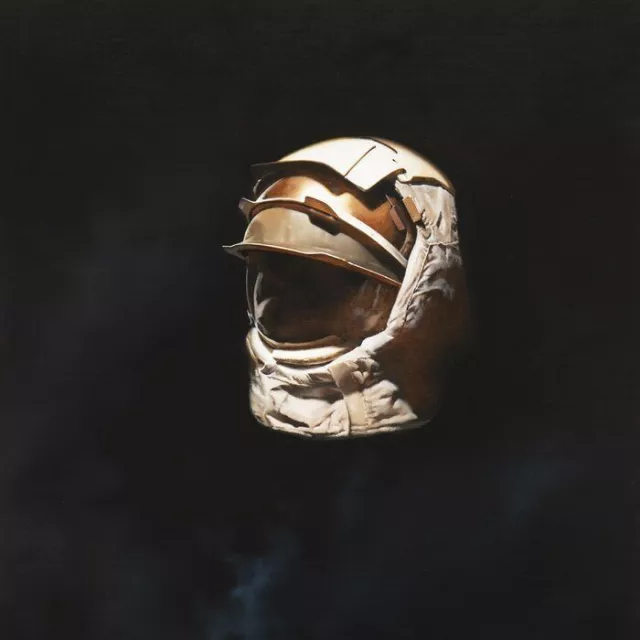
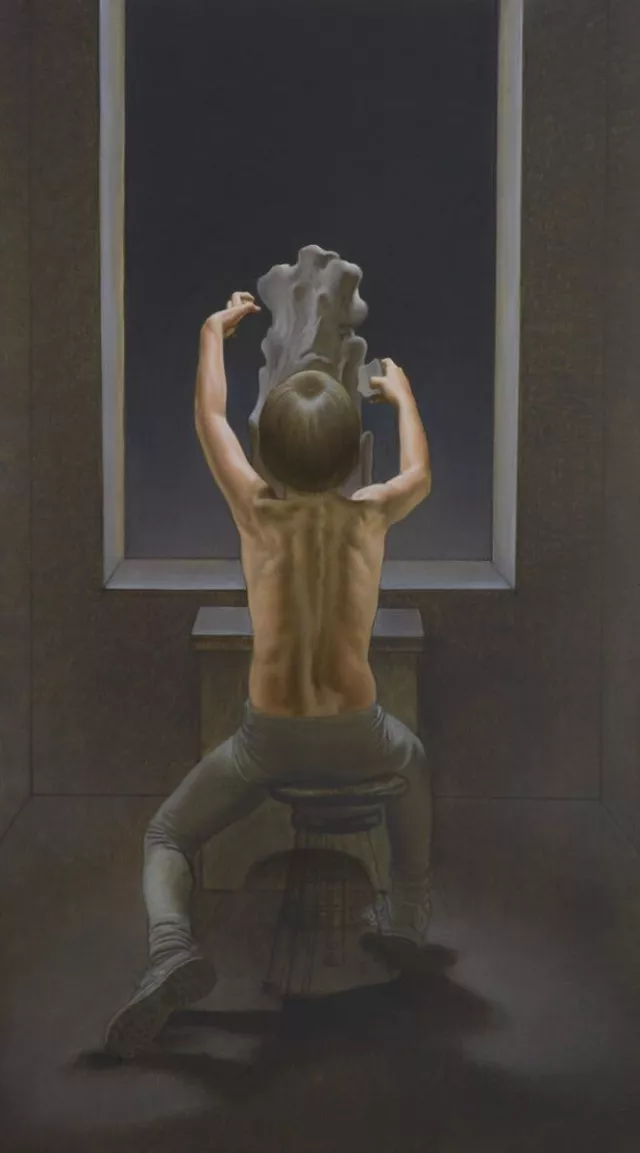
His basic cast, used and developed in painting, consists of the arrangements of objects and the figure so familiar to the medium. He tests the traditional genres of still life and portrait from the position of “stopped time”. The metaphor of stopped time contains many layers through which his paintings can be read. One is the reflection of the environment in which the artist moves: the studio, full of objects, tools and props connected with the painter's work, and the classroom where he teaches figure drawing. Both are naturally bound to cyclical time, the repeated ritual of creation, in which “outside time” is perceived differently from presence in the artistic laboratory. This double time, here and outside, corresponds to the parallel of inner and outer events that enter the work spontaneously, as uncontrolled streams of consciousness and the subconscious. The studio and the classroom can be identified with an environment of constancy and inner concentration tied to proven painterly means – hence the sense of an archaic appearance of dense painting full of historical and academic connotations. If time is to be stopped, then fully: taken out of the accelerating rush of outside time and placed in the scenery of the “timeless” and the otherworldly, in the hidden folds of the body, in ambiguous states of things, in the materiality and surface of objects which, through the magic of painting, have reached the stage of sight and play out an endless – that is, stopped – part in an unknown script. While the script and its dramatisation depend on the viewer's own projection, the painter shows banal objects from the perspective of a deformed figure endowed with the aura of an escaping past. It is as if we were looking into an artificially constituted memory that would like to assert itself as binding truth and free us of doubt that we are in fact looking at an unknown, alienated world with all its illusive and illusory “evidence of intention”. This is the crucial moment of the artist's generational feeling, breaking the validity between the seen and the affirmatively classifiable, the accidental and the purposeful, between the concept and what is felt as non-identical – yet which holds the potential for renewal and for preserving a critical “essence” that the outside time of social acceleration and instrumental rationalisation erases.
Sedlecký's paintings are therefore only seemingly “academic”. In reality they perform allegorical and sly operations with the evocation of banality – which the stereotype of perception, the “Proustian habit” formed by passive sight and registering memory, would gladly confirm at once as banality and nothing but banality (!). Yet at that very moment the notion of the “present” dissolves into many uncertainties, hidden places and doubts. So does the unity of the past, understood as one of the absurdly dramatised acts of an unknown play. The only thing that appears to connect time here is the painterly illusion – credible because of the artist's exceptional ability, yet not credible as evidence, fact or concept. The world of one-dimensional rational knowledge begins to fall apart in doubts and uncertainties that also dismantle the rational constructions of spatial and temporal convention. A strong feature of Sedlecký's work is its mystifying quality, which, by questioning what is seen, opens space for varied self-projection and empathy – for which the artist, however, takes no responsibility. His task, superbly fulfilled, remains the renewal of the language of painting itself, which through its choice of subjects and overall execution automatically excludes itself from the priorities of the imitative system of social networks – through its stifling atmosphere, subversive restlessness and the anxiety of alienated time, of an alienated presence within it.
What appears before the viewer's eyes no longer needs to “melt” theatrically and effectively, as in Salvador Dalí's paranoiac-critical method; there is no need to push overwrought emotions, traumas and neuroses, no need for spectacular violence, displayed spleen or pseudo-suffering destruction. In a time of inflationary visuality, the sensitive viewer is struck instead by calm yet ambiguous paintings that irritate with what cannot be answered – paintings that attack in a different, gradual way rather than through instant narcissistic self-intoxication or shocking content; paintings that evoke a stopped fascination with objecthood interwoven with a helplessness of identification, and generate panic by asking unanswerable, eternal questions; that are truthful when they speak of the incomprehensible transience and loneliness of human existence, when they urge us to share “things” that contemporary society camouflages, dresses in cheerful, contented scenery and consistently pushes out of media and communication. The truth of painterly illusion opens here differently than usual – from angles that are anything but self-representation. That is why they convict any attempt at an unambiguous present of retouched arrangement, idealisation or mystification: Sedlecký's paintings, openly hosting a different self-projection of each viewer, must remain in their ambivalence. Communication between artist and viewer through the work of art thus finally reaches the ambiguous level where it belongs – where any directive outer reduction is weakened in advance, together with the applied norm and the systemic role of the social cult of concepts, whose pragmatic rigidity is itself often the reason we perceive the world as formless, tiresome or unbearable boredom, banality, and ultimately emptiness with which we unconsciously identify.
— Petr Vaňous