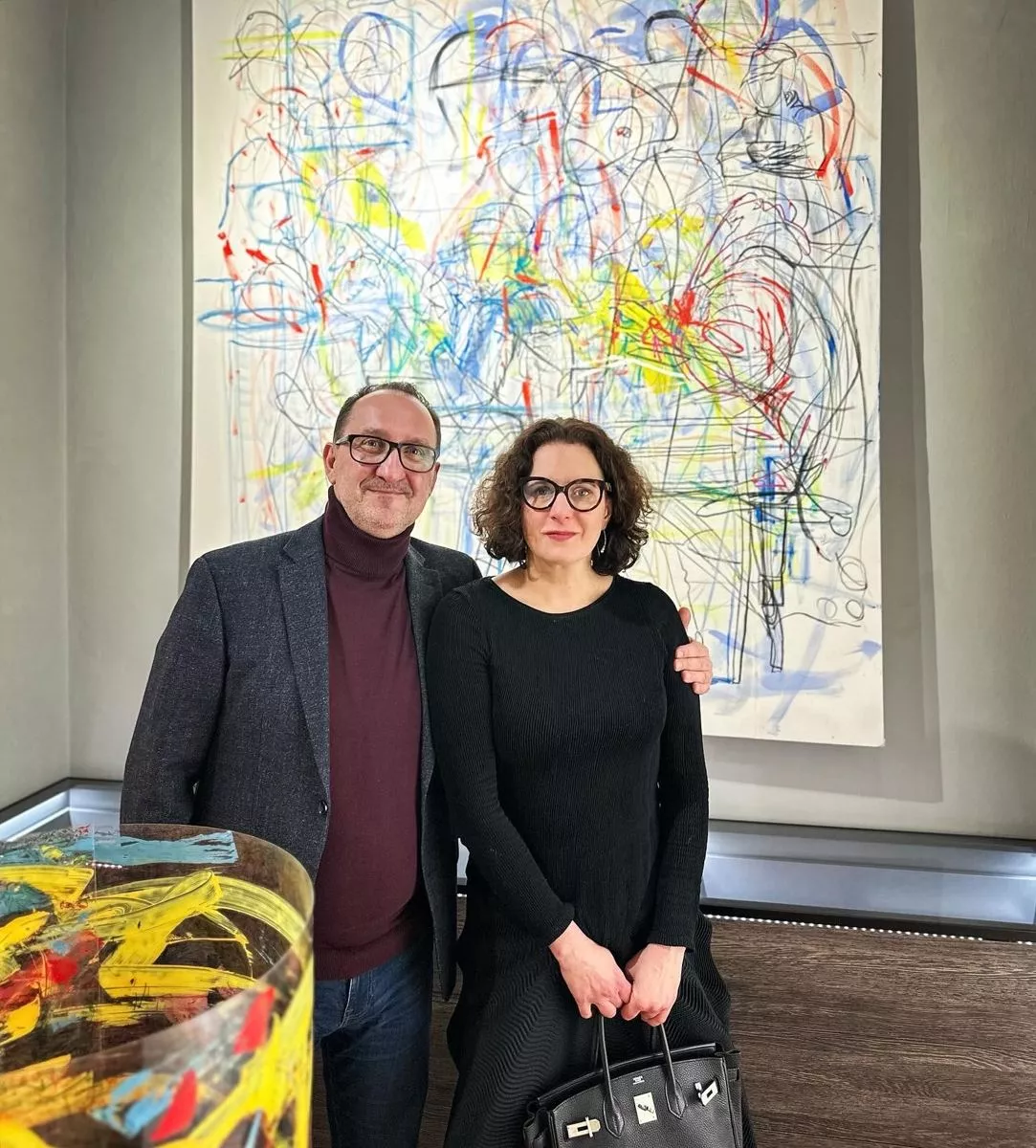
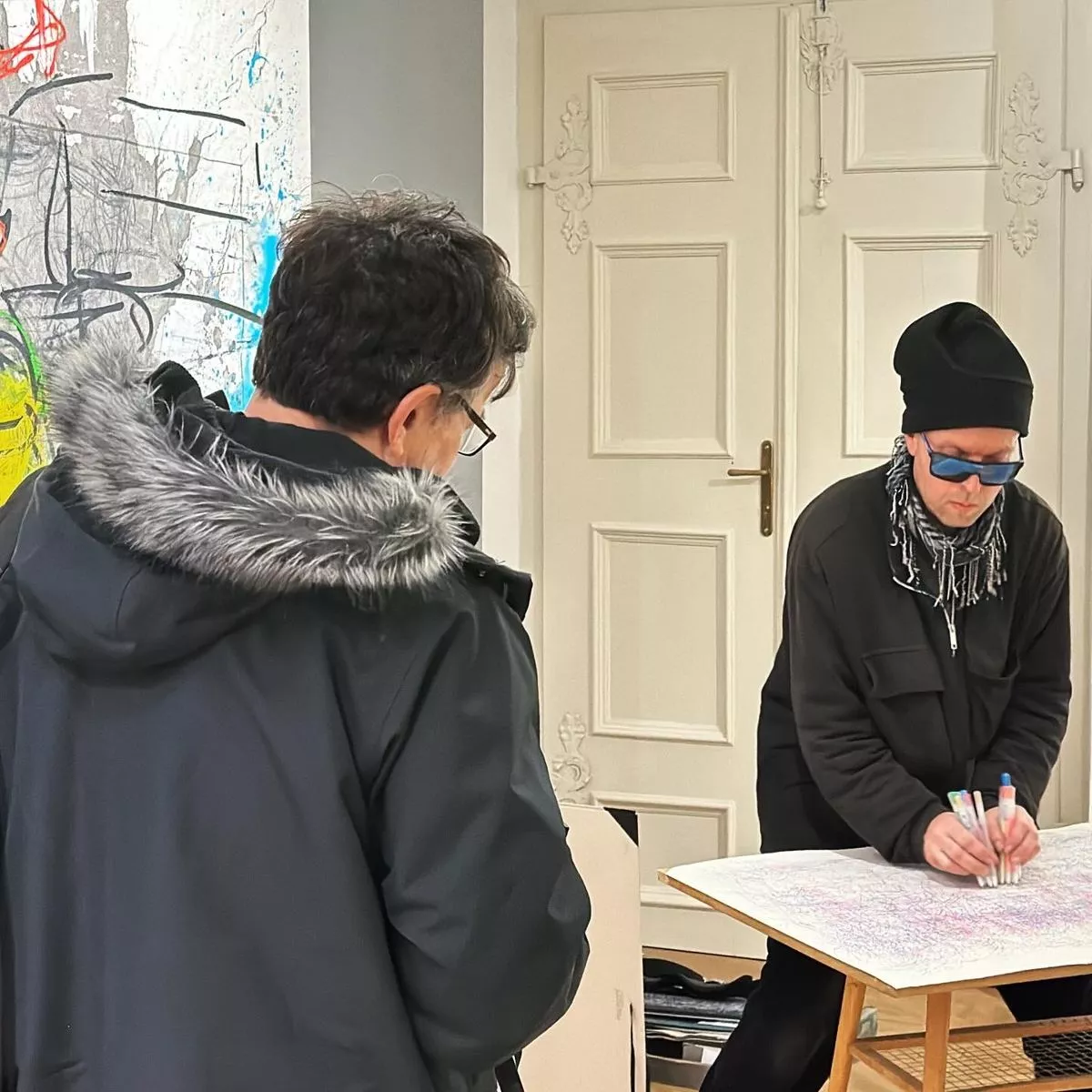
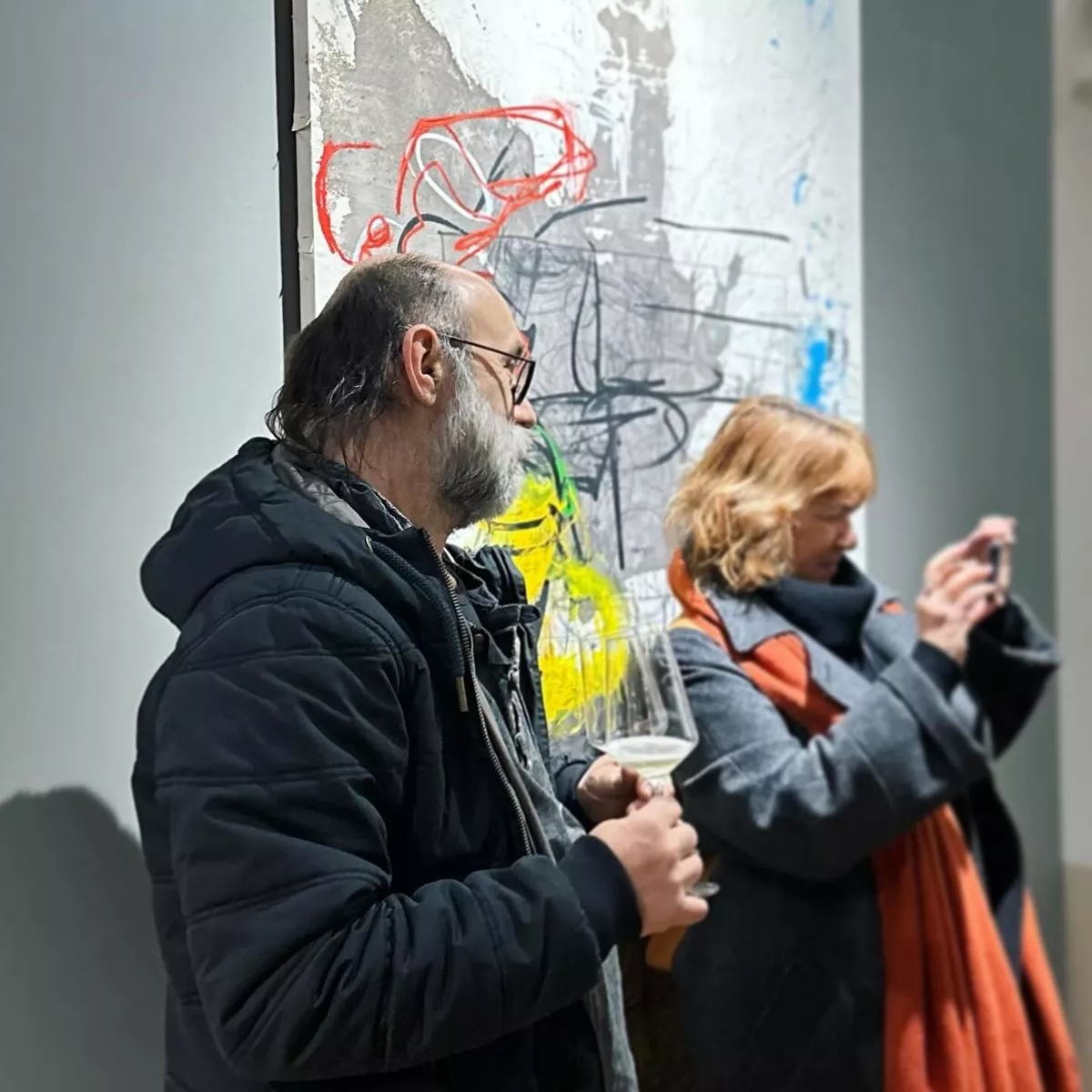
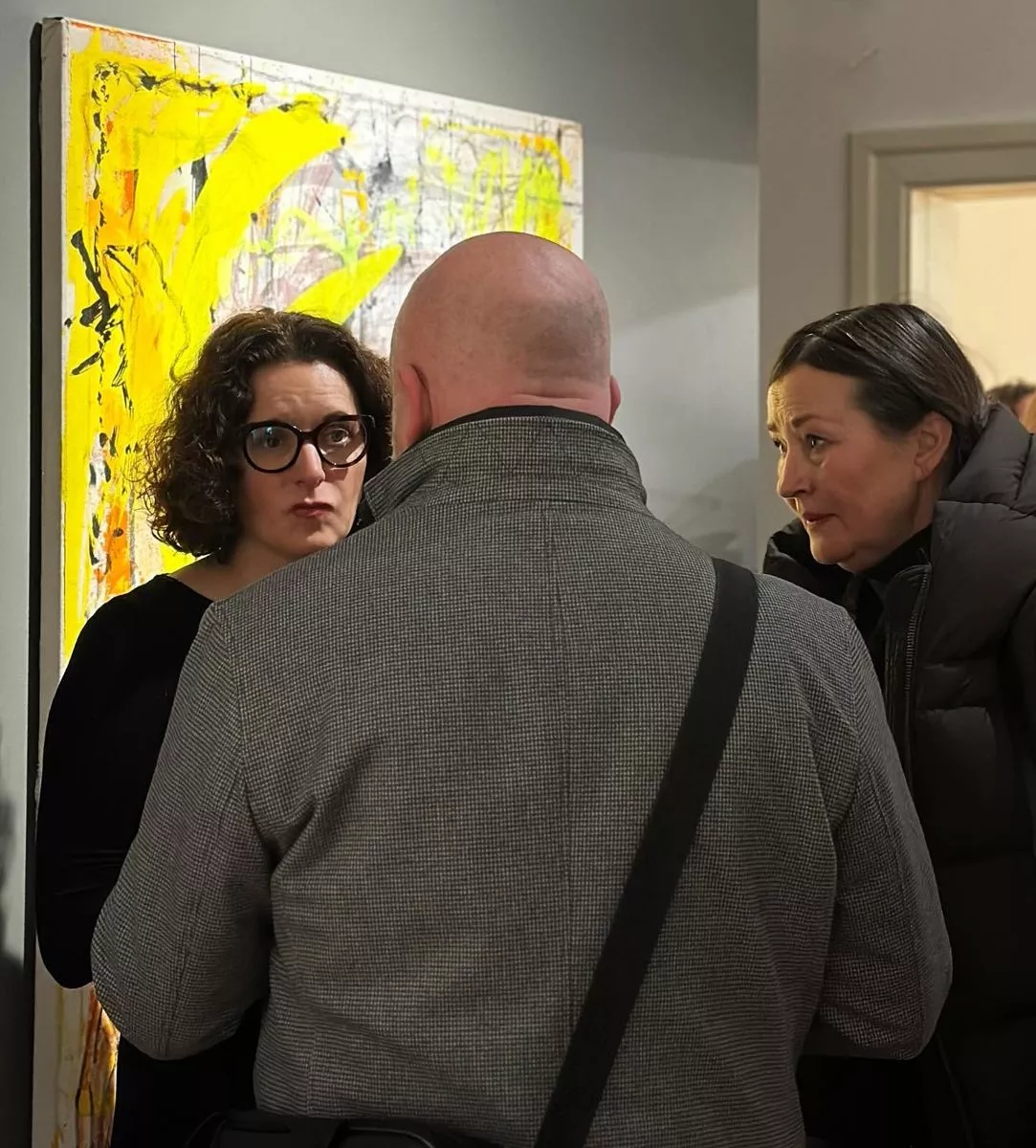
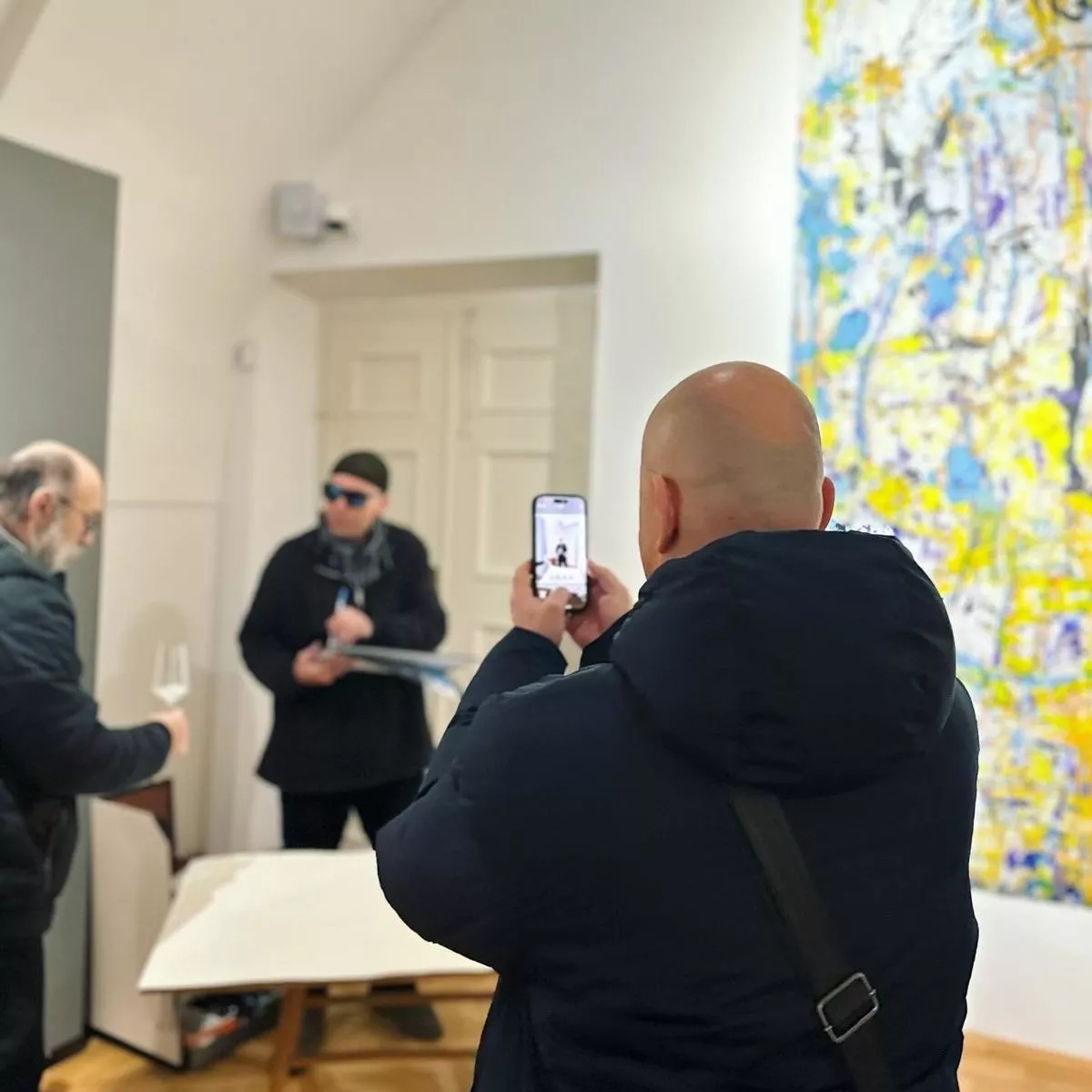
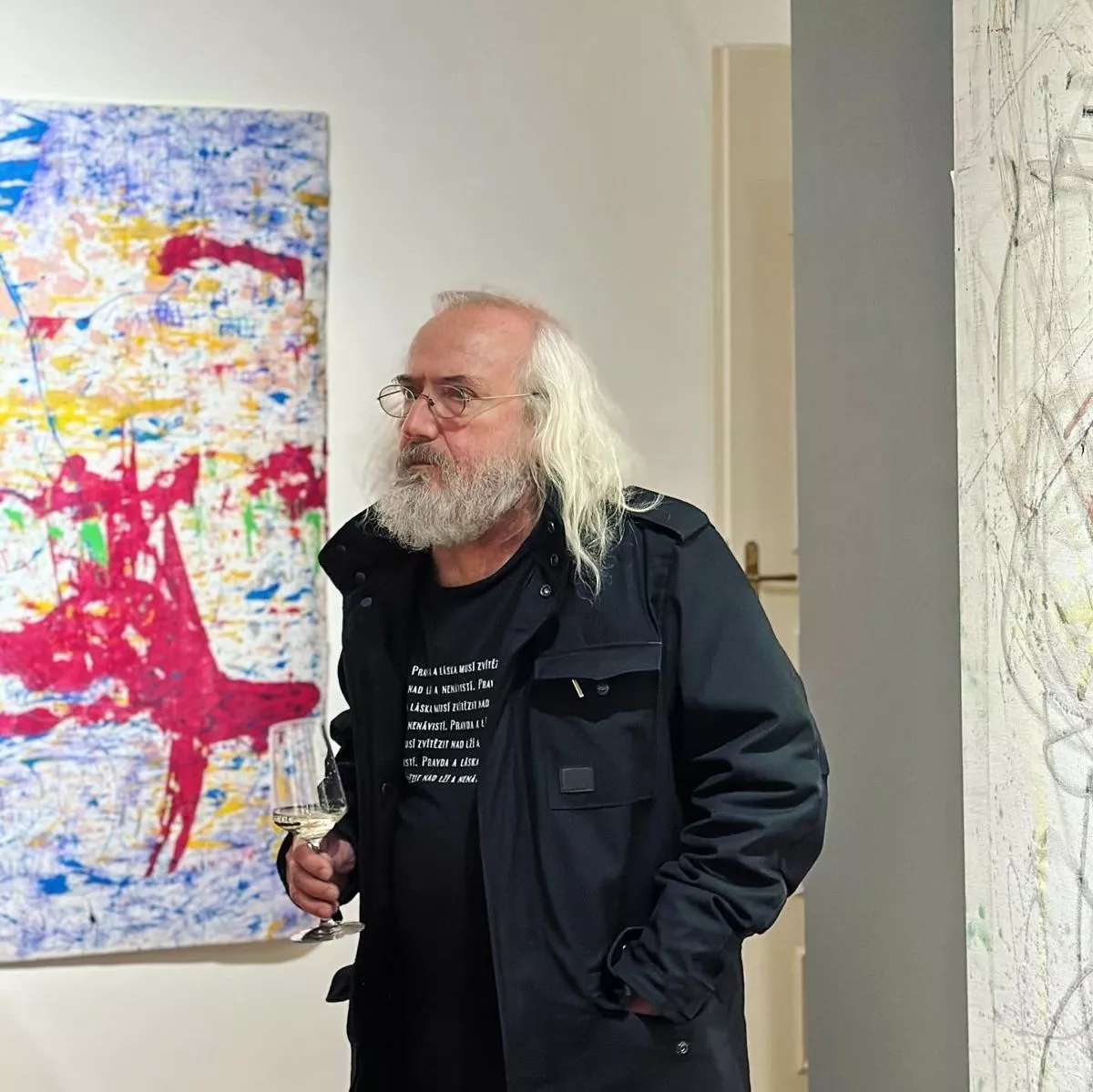
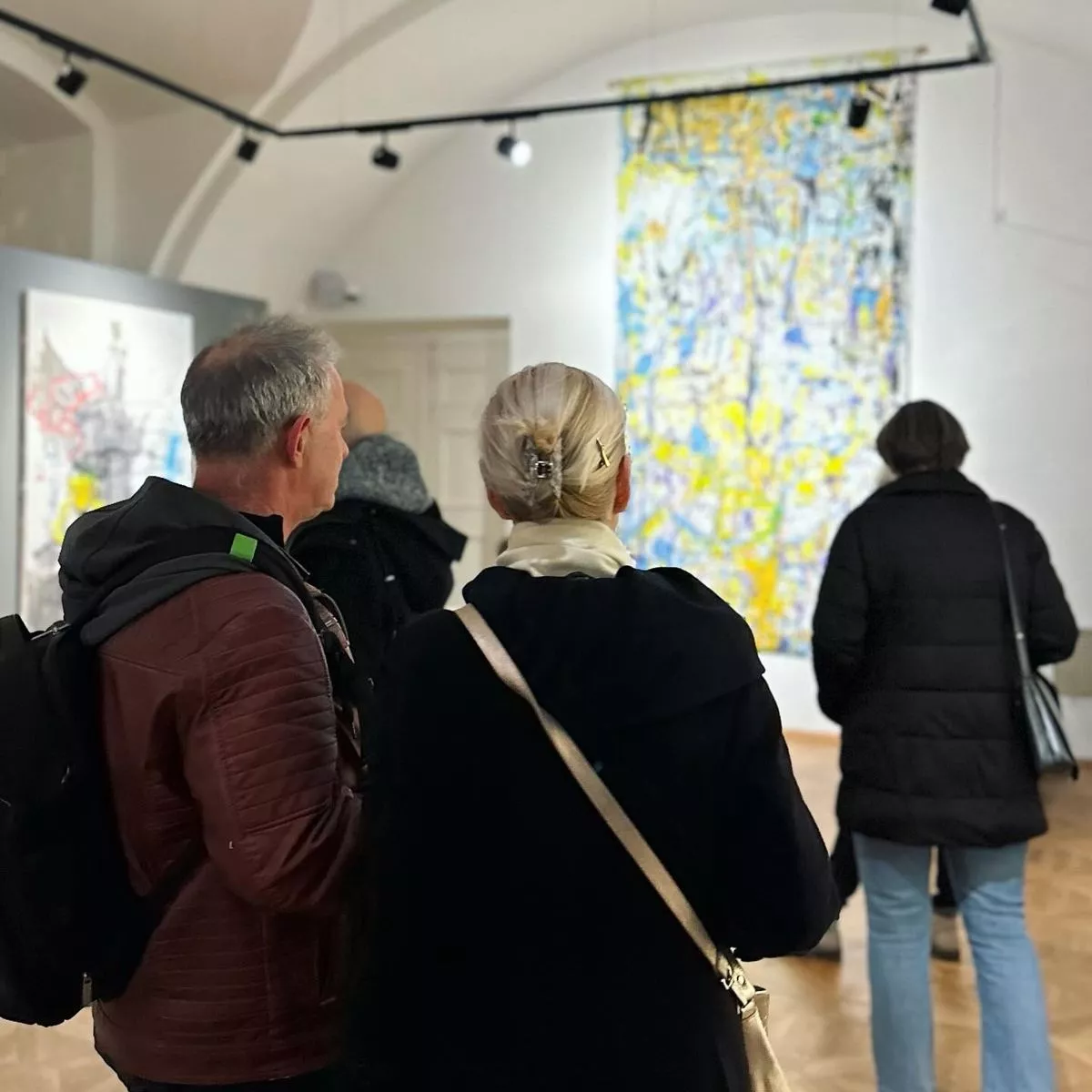
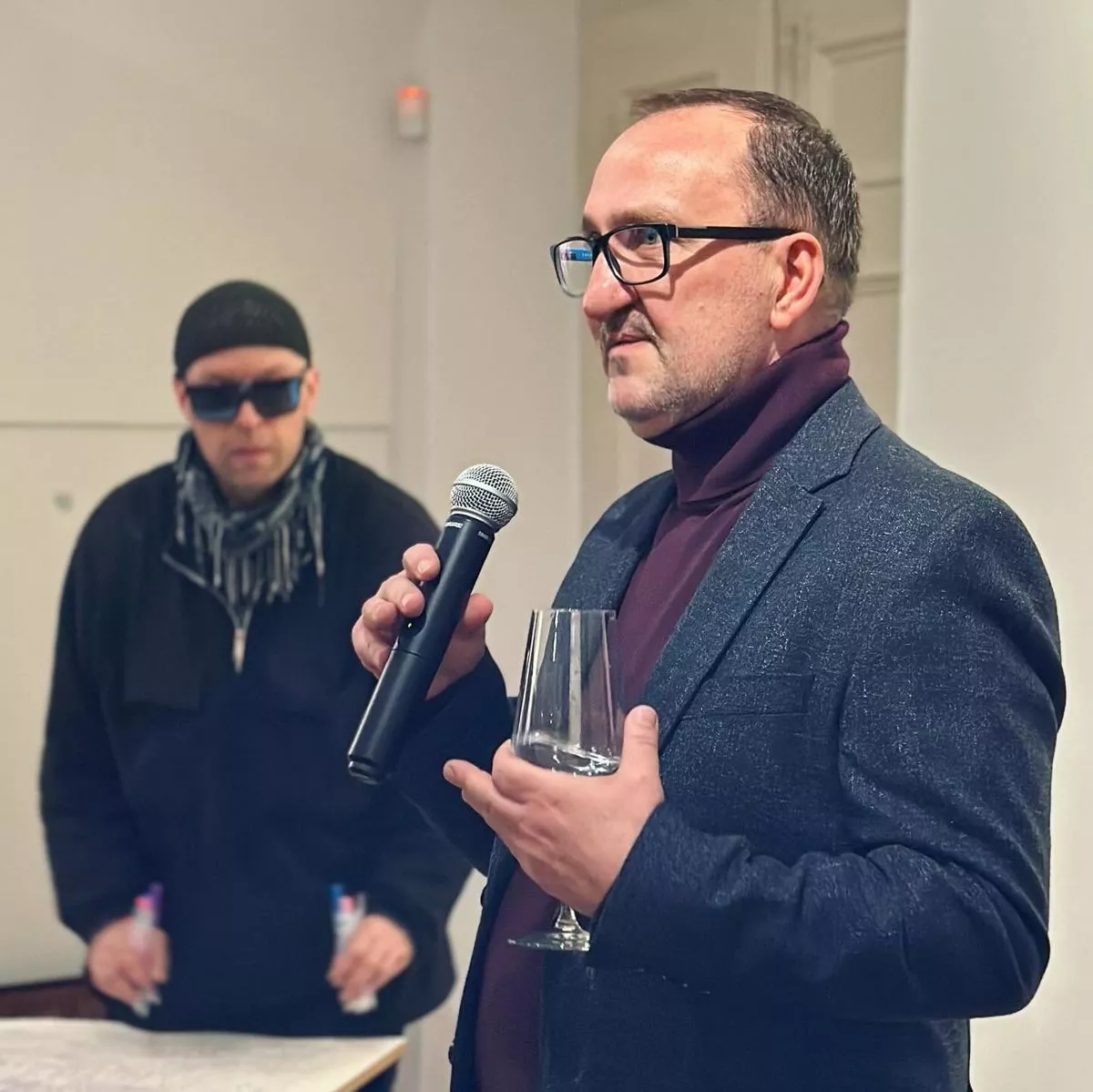
If anyone can be called, without exaggeration, a distinctive solitary figure of contemporary art who resists fashionable trends and doggedly follows his own path, it is Josef Duchan. He is impossible to overlook on the Czech, and especially the Prague, art scene – not only for his original work but for the very process of its making, which adds a peculiar performative element. Duchan is often seen at openings, concerts or in clubs with a strap around his neck holding a board with paper, a mobile desk. He seems barely to notice his surroundings, completely absorbed in drawing. He draws with quick movements of both hands at once, as if performing a mysterious ritual. He seems to draw constantly, everywhere and in all circumstances – cycling, on the metro, in the car, walking through the city or the countryside. He is even said to draw in the dark. He draws on tiny cards, tracing paper, cardboard and the backs of printed banners, on transparent film, on metal sheets, on broken phone screen protectors and on car windscreens. He draws everything he sees around him. Visual impressions flow through him in an unbroken stream straight onto paper. Like a tomograph, he scans the surrounding world and its changes over time in thin slices: a pulsing street with the panorama of Prague Castle approaching in the background, passing trams and cars, a blinking traffic light… At other times his subjects are gallery visitors, actors on stage, musicians, or the landscape rushing past a train window. Each layer of the drawing represents one moment of reality, soon covered by another and then another, more recent one. It is as if the artist moved through space with a camera, pressed the shutter with every step and then stacked the resulting photographs, printed on transparent film, on top of each other. This record of reality in motion through space and time takes place on the surface of a single sheet of paper. The overlapping planes create a dense web of vibrating lines in which the original scene can barely be deciphered. At other times the draughtsman stops at two or three layers, in which concrete motifs remain clearly legible.